

Port Authority of NSW
Managing one of Australia's most operationally critical digital environments
Port Authority of New South Wales oversees a network of working harbours and maritime facilities supporting commercial shipping, cruise operations and critical infrastructure across the state.
The website delivers operationally critical information including vessel movements, port notices, cruise schedules and emergency updates.
Doghouse rebuilt the platform on Doghouse SaaS, creating a single operational environment that unified maritime services and integrated real time operational data into a more accessible and resilient digital experience.
- Sydney Harbour
- Cruise tourism
- Port Botany
- Container trade
- Newcastle
- Bulk exports
- Port Kembla
- Industrial trade
- Eden
- Regional shipping
- Yamba
- Fisheries and marine services
Built for four very different audiences.
Shipping companies.
Real-time vessel tracking and environmental data, where operations teams need it.
Cruise passengers.
Intuitive access to terminals, parking and the local attractions around each port.
Internal teams.
Security, governance and information control across the platform.
Each port location.
Localised content within a unified organisational structure, so each port keeps its identity inside one platform.
Complex operations. Diverse users. One platform.
Real-time operational data.
Shipping companies needed live vessel tracking and environmental data inside the platform, not on a separate dashboard.
Public-facing service.
Cruise passengers and the wider public expected an intuitive experience for terminals, parking and local information.
Critical infrastructure security.
The platform had to meet critical infrastructure security protocols while staying fully accessible to the public.
Multiple ports, one organisation.
Six ports, each with its own identity, content and audience, sitting cleanly inside a single organisational structure.
User research that shaped the build.
We combined technical architecture with human-centred design, beginning with stakeholder research across maritime operators, cruise passengers, venue hire coordinators and internal teams to understand how different audiences relied on the platform day to day.
The process included technical audits of existing systems, co-design workshops, personas, top task surveys, one on one interviews, card sorting and tree testing to validate the information architecture before design and development began.
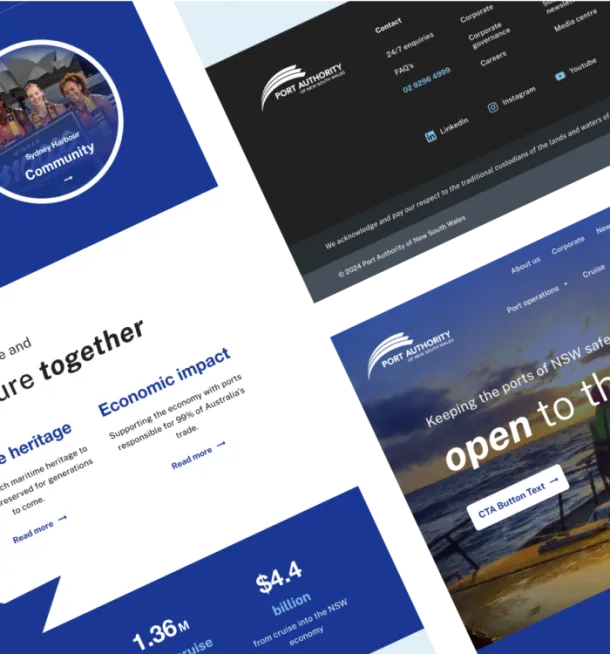
The outcome was a platform structure shaped around real user behaviour, search driven for cruise passengers, operationally efficient for maritime teams, and clear and accessible for the broader public. Ninety-three per cent of users confirmed they could find what they needed easily.
Considered architecture, human-centred design.
Audit.
A deep technical audit of the existing systems, including the Port Management Information System, surfaced what was working and what needed rebuilding.
Research.
Interviews with more than 1,000 users across maritime operators, cruise passengers, venue hire coordinators and internal teams. The needs of every audience surfaced before any design started.
Co-design.
Workshops with operational and technical stakeholders. Card-sorting and tree-testing refined structure and navigation around how people actually work.
Iterate.
Iterative development cycles aligned technical delivery with real-world use, with the platform tested against the day-to-day demands of one of Australia's most complex operational environments.
What we built.
Real-time vessel data.
XML integration with the Port Management Information System brings live vessel movement into the platform.
Operators see what's happening on the water without leaving the page.
Weather and tide data.
Embedded data from official maritime authorities.
One source of truth for the conditions that drive operations.
Secure APIs.
Enterprise authentication aligned with critical infrastructure requirements.
Integration without compromising security.
Flexible content architecture.
Each port keeps its identity, workflows and local content.
One platform behind it, with shared structure and tooling.
Accessibility and responsiveness.
WCAG 2.1 AA compliance across desktop and mobile.
The same platform works for shipping operators and cruise passengers alike.
Managed AWS hosting.
Multi-AZ on District SaaS, with auto-scaling for cruise season peaks.
WAFs, PCI DSS compliance, Fastly CDN and continuous monitoring.
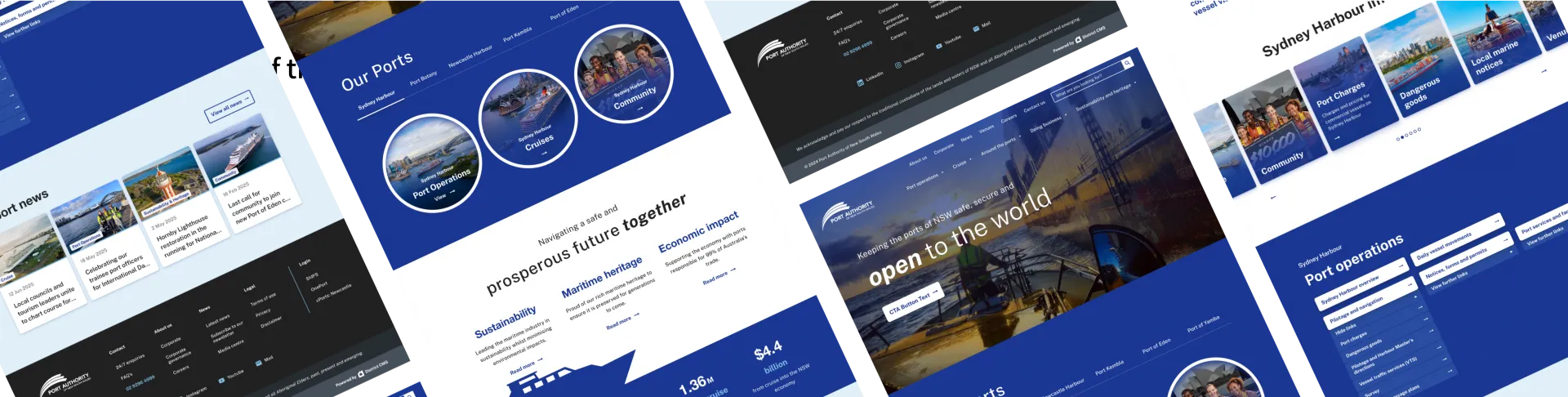
A new home for community and commerce.
Around the ports. A new section dedicated to the people, projects and events that make NSW ports more than a working harbour. Vivid Sydney activations, the Eden Whale Festival, restaurants and bars at White Bay — all surfaced where the community can find them.
Doing Business followed the same logic. Commercial hirers, procurement leads and partnership opportunities now sit on their own destination. Cruise customers stop landing on venue hire pages by accident and the platform turns venue hire enquiries into qualified leads.
Reliability that critical infrastructure needs.
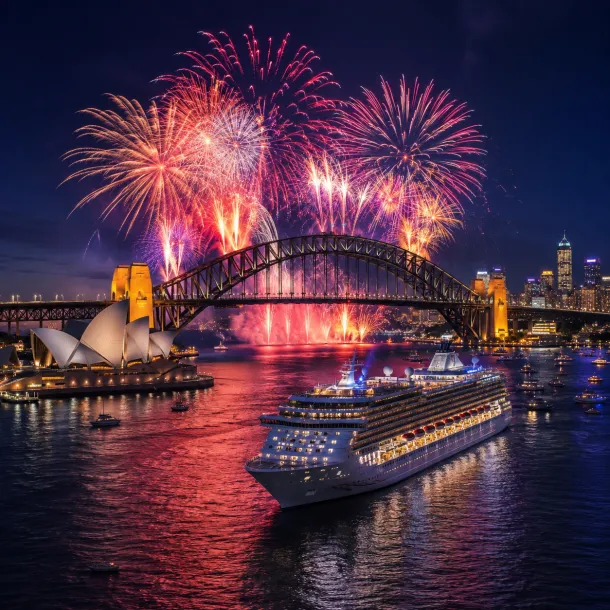
When a cruise ship is docking, a port authority can not afford downtime. The platform runs on our fully managed District SaaS infrastructure on AWS across multiple availability zones, optimised for government and critical infrastructure clients.
Automatic scaling, WAF protection, Fastly CDN, and continuous monitoring with automated backups and disaster recovery. The internal technical overhead is gone, and reliability, performance and security are baked in.
The new website is very clean, professional, and modern, especially compared to other websites in the industry. The design is intuitive and easy to navigate, even for users unfamiliar with Port Authority processes. The consistency between all devices from both UI and wayfinding perspective is amazing.
The outcome.
Modernising critical infrastructure?
Real-time data, enterprise security, multi-stakeholder design. We handle complexity at scale.